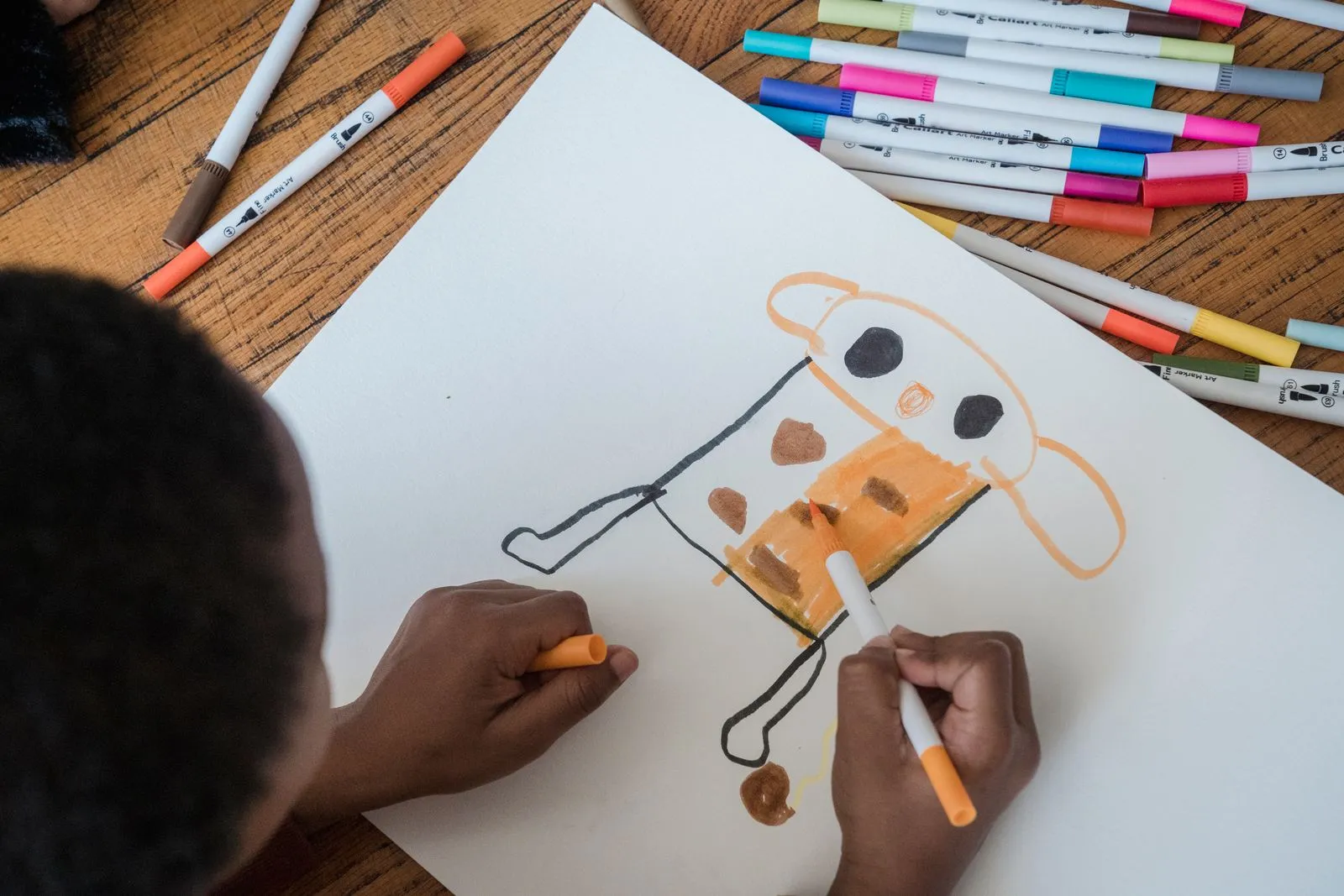
Walk into any home with young children and you will find the same gallery: drawings taped to the fridge, curling at the corners, replaced weekly, eventually gone. Children make thousands of artworks in a childhood. Almost none survive it. Kiko & Manyi began with a simple refusal of that fate — what if the best of a child's work became something real enough to wear, gift and keep?
The problem: children's creativity has no supply chain
Turning one drawing into one good t-shirt used to be genuinely hard. A hand drawing is not a print file: it needs cleaning, vectorising and colour-preparing before any factory will touch it — skilled work that made single-piece orders uneconomical. So custom merchandise stayed the territory of bulk orders and corporate logos, while the most personal designs in the world, made by children, stayed on the fridge.
How the platform works
- AI vectorisation turns a photographed hand drawing into crisp, print-ready vector art — the expensive human step, automated.
- Describe-to-design: families without a drawing in hand can describe an idea and let AI create the artwork.
- Instant preview shows the design on the product before ordering, so what arrives matches what was imagined.
- One-piece minimum and global delivery: a single shirt is a viable order, shipped to more than 30 countries.
Why an education ecosystem runs a merch platform
Inside the OpenKids ecosystem, Kiko & Manyi is the commerce arm of a conviction: children's work deserves to be treated as real. Our creative arts programme teaches children to make; exhibitions and competitions teach them their work can stand in public; Kiko & Manyi closes the loop by making that work physical — a shirt worn to school, a print in a grandparent's home. It is the same method that runs through everything we do — create, then let the work meet the world — extended past the classroom wall.
Our view: printing a drawing is a pedagogical act
A drawing on the fridge says: nice work. A drawing on a shirt someone chose to wear says: your work is worth something to other people. For a child, that second message is formative — it converts making from a pastime into a capability. E-commerce AI happens to be the machinery; the product, as ever in this ecosystem, is a child's confidence with receipts.
Frequently Asked Questions
What is Kiko & Manyi?
Kiko & Manyi is the e-commerce AI platform of the OpenKids / TAFA Group ecosystem. It converts hand-drawn artwork into print-ready vector designs using AI, previews the result instantly, and produces made-to-order merchandise from a single piece, shipping to more than 30 countries.
Can I order just one custom t-shirt from a child's drawing?
Yes. The platform is built around a one-piece minimum: AI vectorisation makes single-item production economical, so one drawing can become one shirt without a bulk order.
Sources