What is VEX Robotics, exactly?
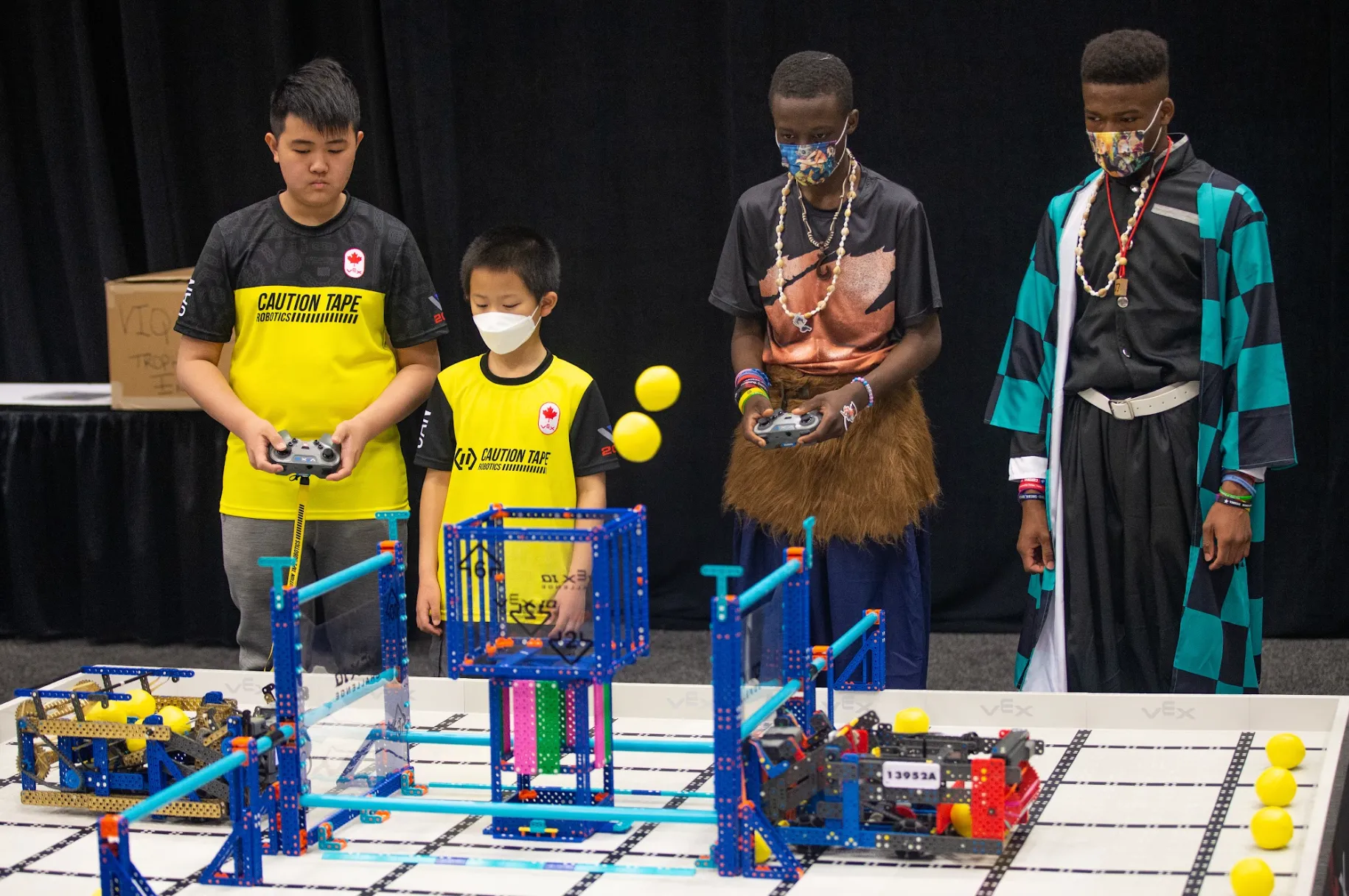
VEX is one of the world's largest educational robotics programmes, run as an annual competitive season. Students design, build and program a robot to play that year's game, then compete at local events that feed into national and international finals — culminating in the VEX Robotics World Championship (REC Foundation). Two platforms cover the ages: VEX IQ for primary and lower-secondary students, and VEX V5 for secondary and beyond.
What do children actually learn from a VEX season?
- Engineering as iteration — a robot is designed, broken, rebuilt and improved dozens of times before finals; children learn that version one is never the answer
- Code with consequences — autonomous routines either score or they don't, in front of referees and a crowd
- Teamwork under a deadline — builders, coders and drivers must ship together; the season does not wait
- Composure — losing a match at 10 a.m. and rethinking strategy by noon is a skill few classrooms teach
- An engineering notebook — the documented design record that competitions require and universities can actually read
What can VEX lead to?
Results in the OpenKids network show the ceiling. Our Competition & Awards programme, for ages 10–24, has campaigned six championship seasons since 2018 — capped by the 2026 VEX V5 world title. Younger students reach the same arena via VEX IQ in our STEAM & AI programme.
- VEX V5 World Championship — High School Division Champions
- 2026
- Team 'FA-SUPREME SQUAD', St. Louis, USA
- 77789A
- VEX IQ Singapore champions 2023–2026 (OpenKids junior teams)
- 4 yrs
- Championship seasons since Turning Point 2018
- 6
The story of that world title is the honest version of what 'worth it' looks like — years of unglamorous rebuilds before one golden weekend in St. Louis.
What does VEX cost in time and money?
Time first, because it is the bigger commitment: a competitive season typically means weekly training that intensifies before events, plus competition weekends across the season. On money, fees vary widely by centre and by level — recreational robotics classes in Singapore generally sit in the tens of dollars per session as a market range, while competitive team programmes cost more once event travel and registrations are counted. Treat any specific figure as centre-dependent; at OpenKids, fees are quoted in a written learning plan after a free trial and assessment, never before.
How do you know if your child is ready?
The best predictor is not age or grades — it is whether your child keeps rebuilding after something breaks. If they tinker past frustration, VEX will multiply that instinct. The low-risk way to find out is a free trial class: a real session, a gentle assessment, and a teacher's honest read on whether a team, a class, or a year of foundations is the right next step.
Frequently Asked Questions
Is VEX Robotics good for university admissions?
It can be a genuine differentiator: VEX produces exactly what admissions readers trust — a multi-year engineering notebook, verifiable competition results and evidence of teamwork under pressure. It works best as part of a sustained record, not a one-season entry.
What age should a child start VEX?
VEX IQ suits primary and lower-secondary students, with many starting around 8–11 after some coding foundations. VEX V5 is the platform for secondary students and beyond; serious teams usually form from age 12 up.
How much time does a VEX season take?
Expect weekly training through the season, heavier build weeks before events, and competition weekends. It is closer to a sports season than a weekly enrichment class — which is precisely why it teaches what it teaches.
My child has never done robotics. Is it too late to join?
Rarely. Teams need builders, coders, drivers and notebook leads — different strengths join at different ages. A trial class and assessment will show whether to join a team now or build foundations first.